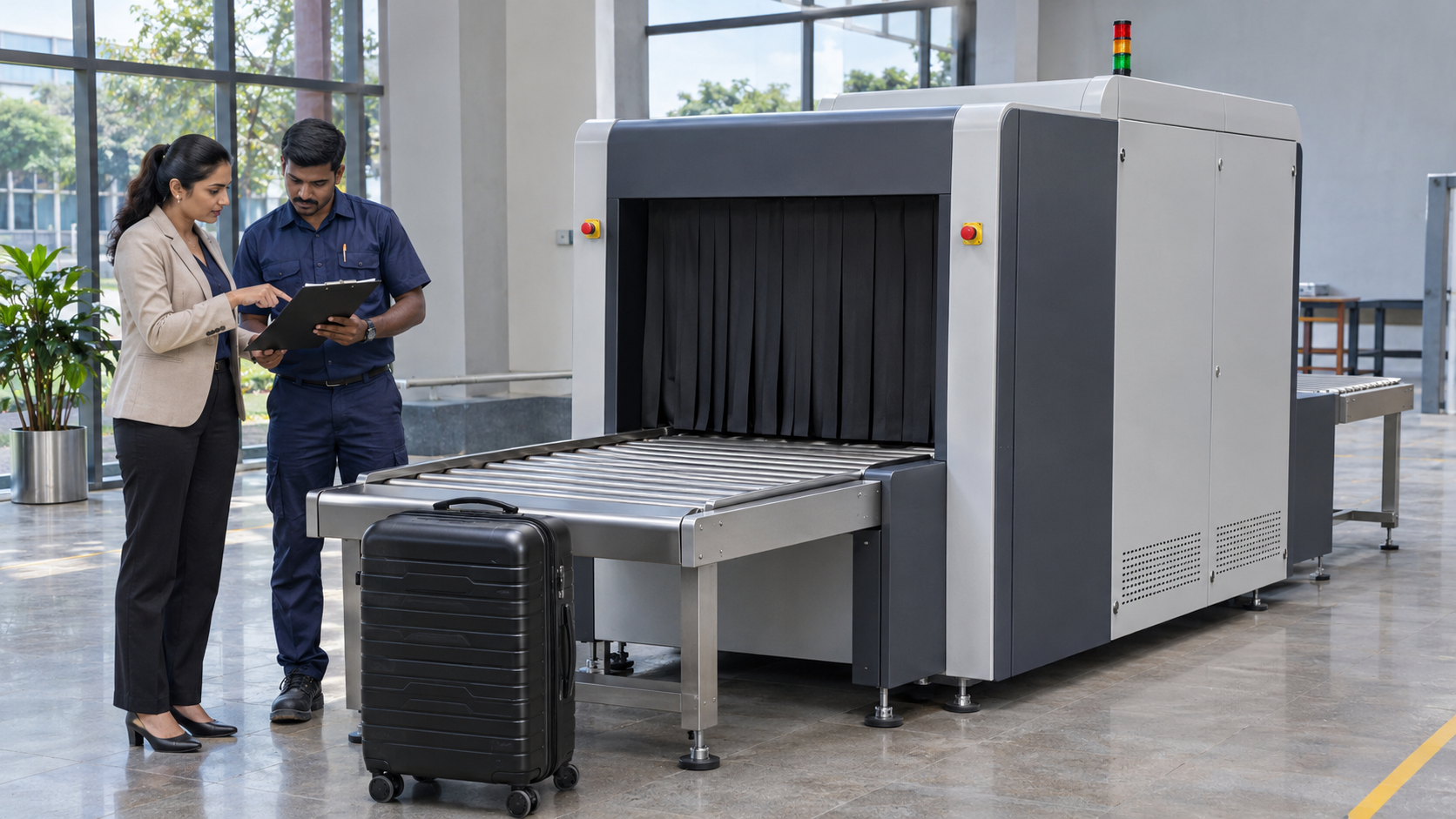
An X-ray baggage scanner can fit the largest suitcase at a checkpoint and still be a poor match for the operation. Loading arrangements may slow the queue, image review may take longer than expected, or the purchase specification may leave training and maintenance responsibilities unclear.
For airport authorities, security consultants and institutional procurement teams, the central question is whether the proposed system fits the complete screening process. Tunnel dimensions are the starting point. Imaging configuration, baggage handling, operator workflow and acceptance testing determine how that specification translates into daily use.
A useful procurement brief connects each requirement to evidence the supplier can demonstrate.
Start with the baggage profile and checkpoint layout
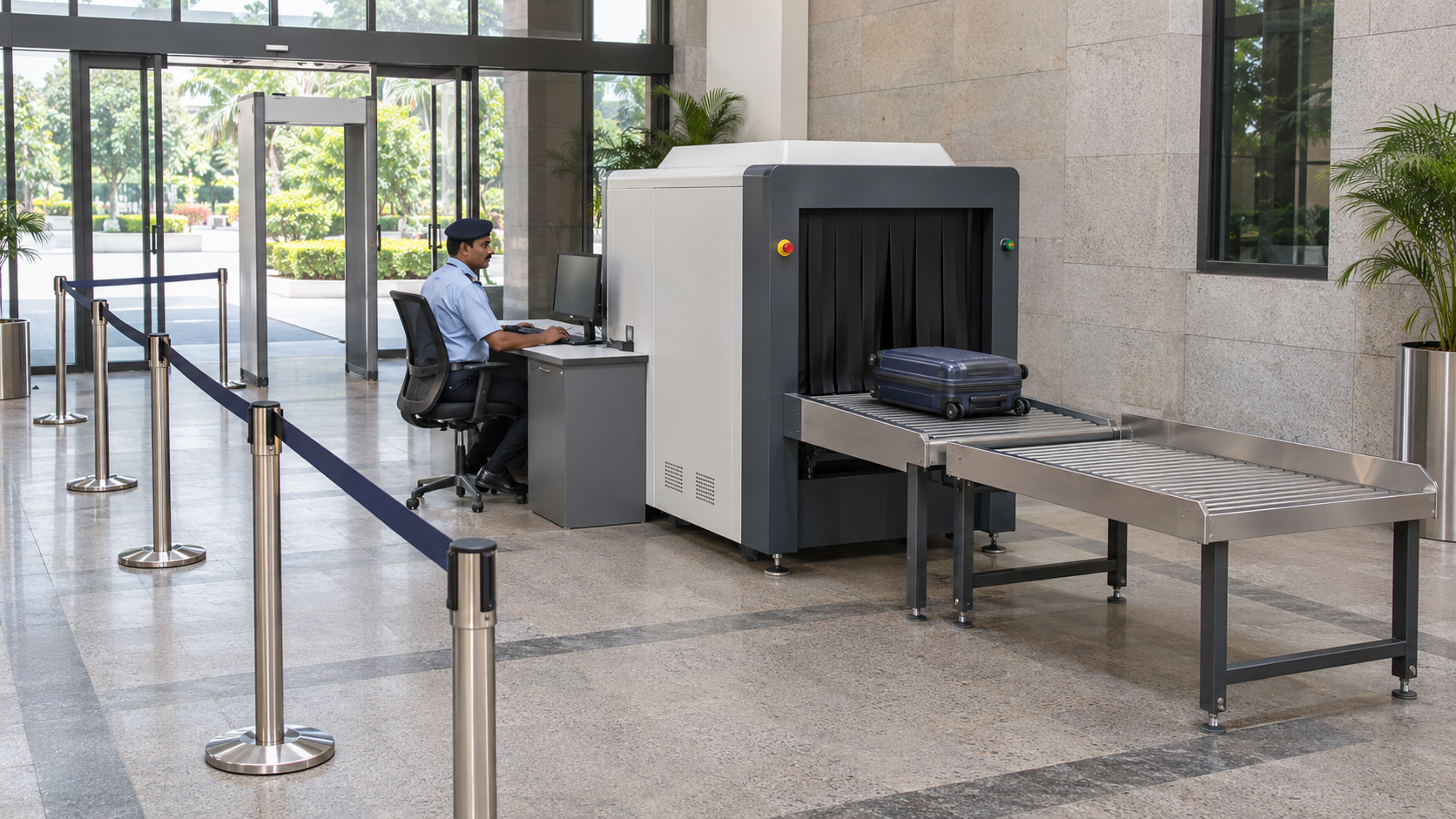
Before requesting a quotation, document what will actually pass through the checkpoint. Record typical and maximum baggage dimensions, weight, unusual shapes, tray use and peak arrival patterns. A visitor entrance handling laptop bags presents a different challenge from a transit terminal handling large suitcases or a facility receiving courier crates.
Specify usable clearance and loading requirements
Ask suppliers to distinguish the nominal tunnel opening from the practical baggage envelope. Trays, protruding handles and the intended loading orientation can affect clearance. Confirm the approved dimensions for the exact proposed model rather than relying on a model name.
Krystalvision's published range illustrates the progression from compact KV 5 systems through KV 6 checkpoint scanners to larger KV 7 and KV 10 families. The category's stated tunnel-width bands are useful for initial shortlisting; they do not replace a model drawing or a baggage-fit demonstration.
Use the baggage scanner series overview to identify the relevant family, then confirm the opening, conveyor height, permitted load and installation footprint against the current model documentation.
Evaluate viewing configuration separately from energy discrimination
A scanner's number of views and its energy-based imaging method answer different questions. Buyers should ask suppliers to explain both instead of treating “dual-view” and “dual-energy” as interchangeable labels.
Ask what the second view contributes
A dual-view X ray baggage scanner provides different projection views of the same bag. These can help an operator interpret overlapping contents, but the configuration should be evaluated with representative baggage and agreed test conditions.
Krystalvision's KV 6 listings include single-view and dual-view options. Specify the exact proposed configuration and distinguish standard equipment from optional software or accessories. A description of the overall range is not confirmation that a particular quotation includes every feature.
Request a demonstration of image tools and alerts
Ask to see image enhancement, material-display modes, image retrieval and any automated alerts included in the offer. Confirm how the operator investigates an alert and what happens when the image remains inconclusive.
For AI-assisted functions, request a written scope of the capability and a documented evaluation procedure. Do not treat an AI label as a substitute for trained interpretation, an agreed escalation process or application-specific approval.
Compare image specifications under stated test conditions
A procurement table may list penetration, wire resolution and generator ratings together. They describe different aspects of the system and should not be reduced to a single “better image” claim.
Ask which results are guaranteed, which are typical, how they are tested and which acceptance method applies to the supplied configuration. Request the relevant current technical documentation and an agreed demonstration before finalising the purchase.
A practical evaluation should let the buyer observe the proposed system with authorised test objects and representative baggage, under the site's security procedures. Record the configuration used so that a demonstration of one model is not mistaken for evidence about another.
Assess the complete screening workflow
Conveyor speed is only one component of checkpoint capacity. Loading, spacing, image review, alarm resolution and baggage collection also affect how quickly the queue moves.
Plan the lane around people and baggage
Check loading space, unloading space, operator-console placement, access to emergency controls and the route for secondary inspection. Confirm that maintenance access remains available after the scanner and any conveyors are installed.
For a hotel, fitting equipment into an entrance without creating a collection bottleneck may be a priority. At a metro checkpoint, arrival surges and passenger movement may shape the lane design. For oversized luggage, loading height and handling arrangements need particular attention. These are illustrative planning scenarios, not claims about specific installations.
Define how operational capacity will be assessed
If throughput is important, agree how it will be measured. Define the baggage mix, staffing, test duration and handling of alarmed bags. A supplier's conveyor-speed figure alone does not establish a guaranteed number of bags cleared per hour at your site.
Include documentation and site readiness in the specification
Ask for model-specific documentation relevant to the intended application and installation. Radiation-safety documentation and aviation security requirements address different issues; a general compliance statement should not be treated as proof that every requirement has been met.
AERB publishes an approval procedure covering X-ray baggage inspection systems. Buyers should check the documentation applicable to the exact equipment and intended use against the current official requirements. See the AERB approval procedure for X-ray inspection systems.
Before delivery, agree the electrical requirements, equipment access route, floor and space constraints, network arrangements where relevant, and responsibilities for installation. Include acceptance records and operating documentation in the handover scope.
Make training and service part of the purchase decision

A baggage screening system needs an operational support plan as well as a delivery date. Clarify operator familiarisation, fault reporting, preventive maintenance, spare-parts arrangements and escalation contacts.
Where images are stored or systems are networked, document access permissions, retention arrangements and the supplier's software-support commitments. Obtain a support plan for the operating system and software actually being supplied.
Krystalvision describes design, manufacturing, supply and servicing as part of its business. Its published Chandigarh International Airport handover report records the installation of five dual-view systems and operational training. That company-reported experience provides relevant context, while the scope and acceptance obligations for each new project should be documented separately.
Use a checklist that turns requirements into evidence
| Procurement area | Question for the supplier | Evidence to request |
|---|---|---|
| Baggage fit | Will the intended baggage pass in the required orientation? | Model drawing and representative fit demonstration. |
| Imaging | What views, tools and optional functions are included? | Configuration schedule and supervised demonstration. |
| Performance | Which figures are guaranteed and under what conditions? | Current datasheet and agreed test procedure. |
| Handling | Is the loading height and conveyor arrangement suitable? | Layout drawing and load specification. |
| Workflow | How will loading, review and secondary inspection work together? | Site plan and defined operational trial. |
| Documentation | What applies to this model and deployment? | Applicable approval and technical records. |
| Handover | What must be completed before acceptance? | Test records, manuals and training scope. |
| Lifecycle support | Who handles faults, maintenance and software support? | Written warranty, service and support terms. |
Choose a system around the screening task
The strongest specification describes what the checkpoint must achieve and how the proposed equipment will be evaluated. It gives suppliers enough information to recommend a configuration and gives buyers a basis for comparing offers consistently.
For organisations evaluating an X Ray Baggage Scanner, Krystalvision provides a starting point for discussing manufacturer capabilities and matching the system to the intended screening environment.
Share your baggage dimensions, peak arrival pattern, site layout and documentation requirements with Krystalvision to request a configuration discussion and a project-specific quotation.